
About the school
Santhi means peace. The rest is practice.
Santhi School of Yoga & Vedanta Studies is a small, traditional Hatha yoga school in the lanes of Chirattapalam, Fort Kochi. One teacher, one lineage, and more than fifteen years of mornings.
The story
A school the size of a conversation
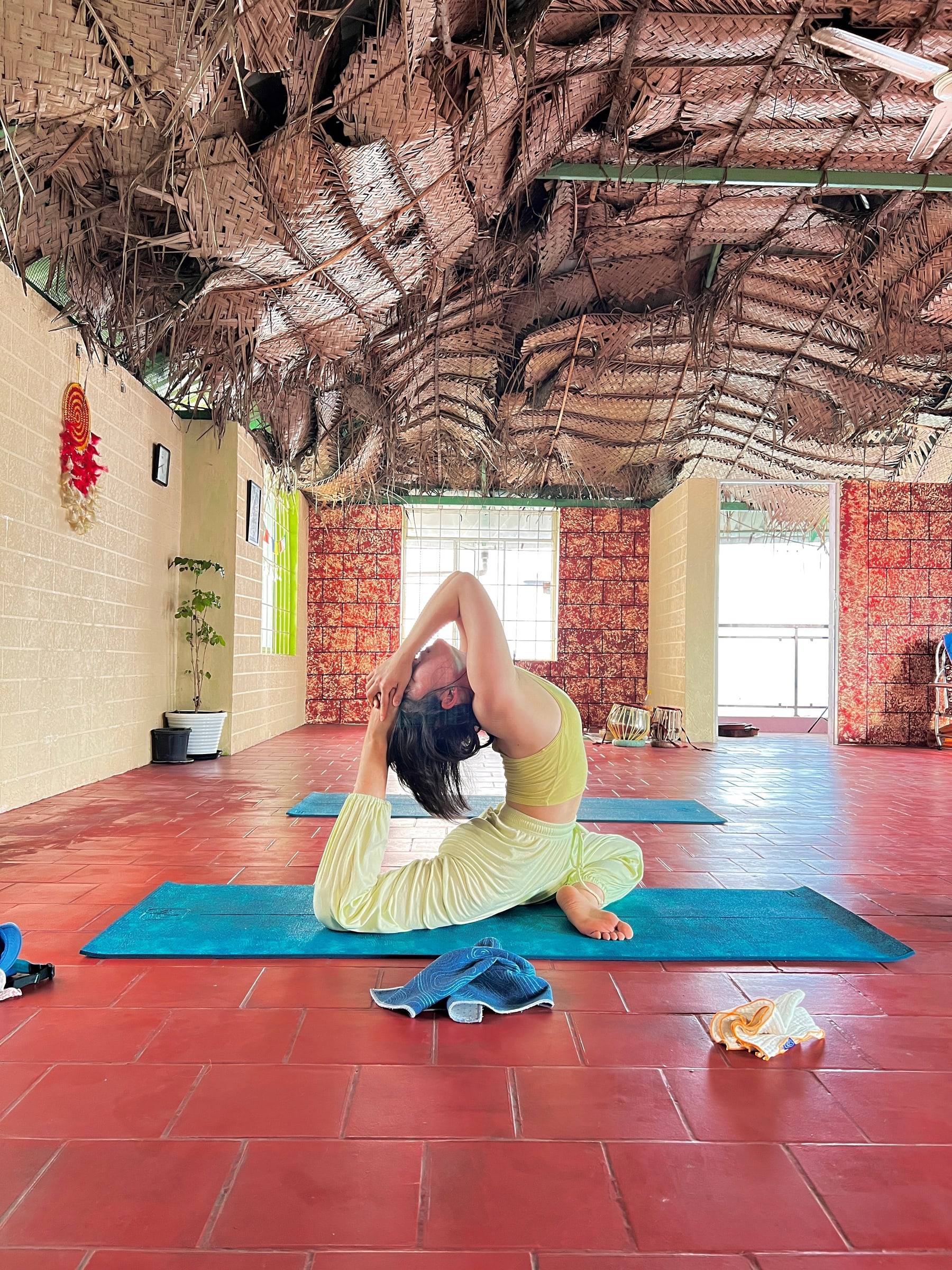
Santhi grew the way most good things in Fort Kochi grow: slowly, in one neighbourhood, one class at a time. It is a Hatha yoga school in the Sivananda stream, set in the quiet lanes of Chirattapalam, a short walk from the harbour and the fishing nets.
More than fifteen years on, the shape is simple. There are two classes a day, every day. The groups are small. The class still begins with breath and still ends with a long, guided rest. What has grown is the reach — more than five thousand group classes, more than seventy international teacher-training batches and more than twenty retreats, all from the same few lanes near the harbour.
The full name — Santhi School of Yoga & Vedanta Studies — is a reminder that Hatha yoga was never only about the body. Vedanta asks who is doing the practising. The school’s job is to keep both questions in the room.
The teacher
Master Aksharanand A S
Known to every student simply as Achu.
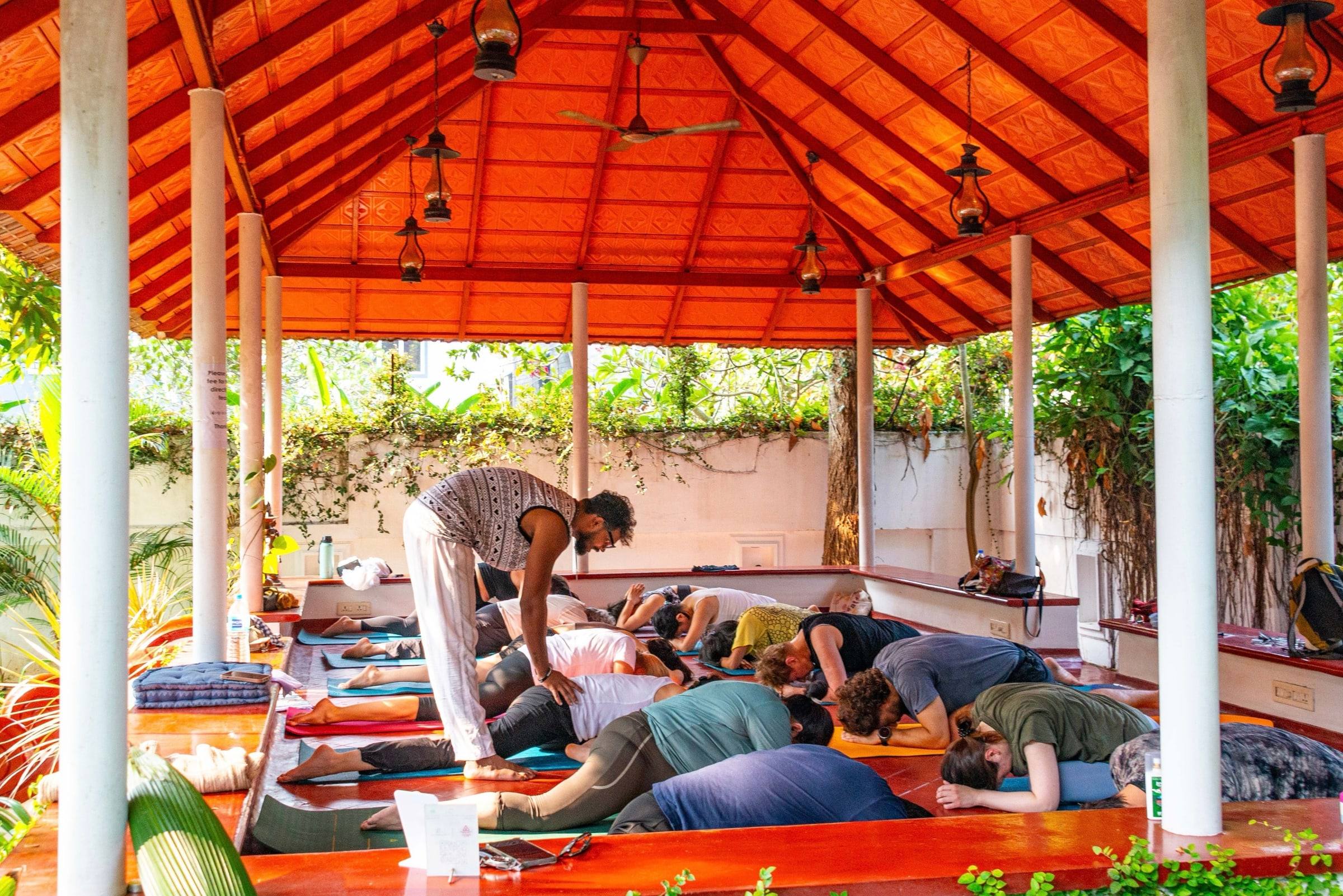
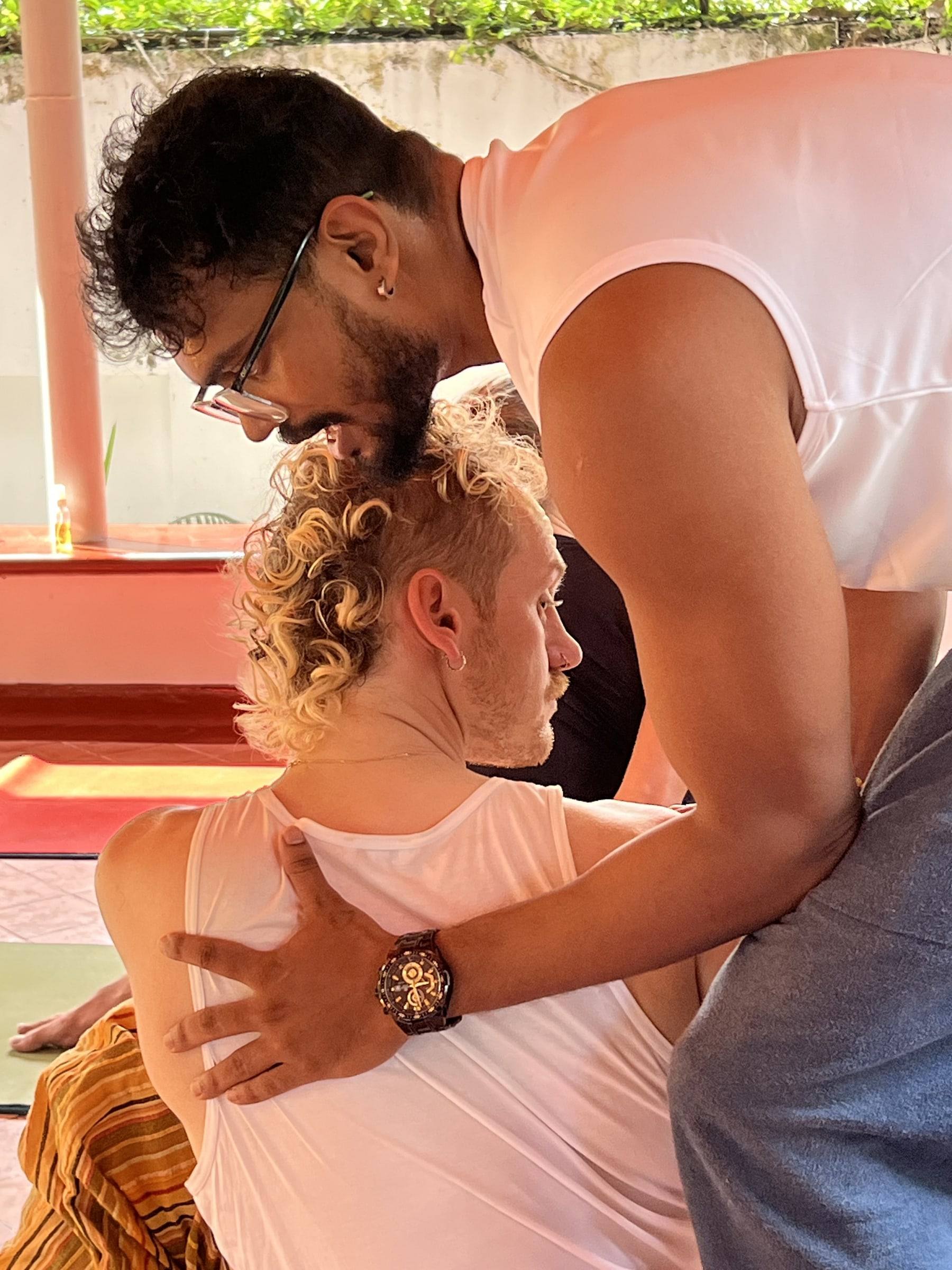
Achu founded Santhi and teaches its daily classes, private sessions, workshops, retreats and teacher trainings. He trained in the Sivananda tradition and holds its Advanced Teacher Training Certificate, and has been teaching in Fort Kochi for more than fifteen years.
The teaching aims to be patient, precise and unhurried: the same posture corrected as many times as it takes, the reason for it explained, and beginners and long-time practitioners given the same attention in the same room.
- Tradition
- SivanandaClassical Hatha, the five points of yoga
- Credential
- Advanced TTCSivananda tradition
- Teaching
- 15+ yearsIn Fort Kochi, daily
- Trainings led
- 70+ batchesInternational groups, 200 hours each
15+
Years teaching in Fort Kochi
5,000+
Group classes guided
70+
International training batches
20+
Retreats led
4.9/5
Average guest rating
Figures from the school’s own records, September 2026.
How we teach
Four things we will not change
Everything else — timings, venues, the colour of the mats — is negotiable.
Small on purpose
The school has never tried to be large. A room where the teacher can see every student is worth more than a waiting list.
Tradition before trend
Pranayama, relaxation and philosophy stay in every class, even when fashion prefers faster things. The practice is older than the market for it.
Patience as method
Postures are held long enough to learn from; corrections are repeated until they land; nobody is hurried towards a shape.
Honesty in the small print
Clear prices, no memberships, and a plain statement of what our certificate is — and is not — before anyone pays for training.
The method
Five threads, one practice
Hatha yoga in this school is not a class of postures with breathing bolted on. Five strands are taught together, the way the Sivananda stream hands them down, and each one holds the others up.


1 Āsana
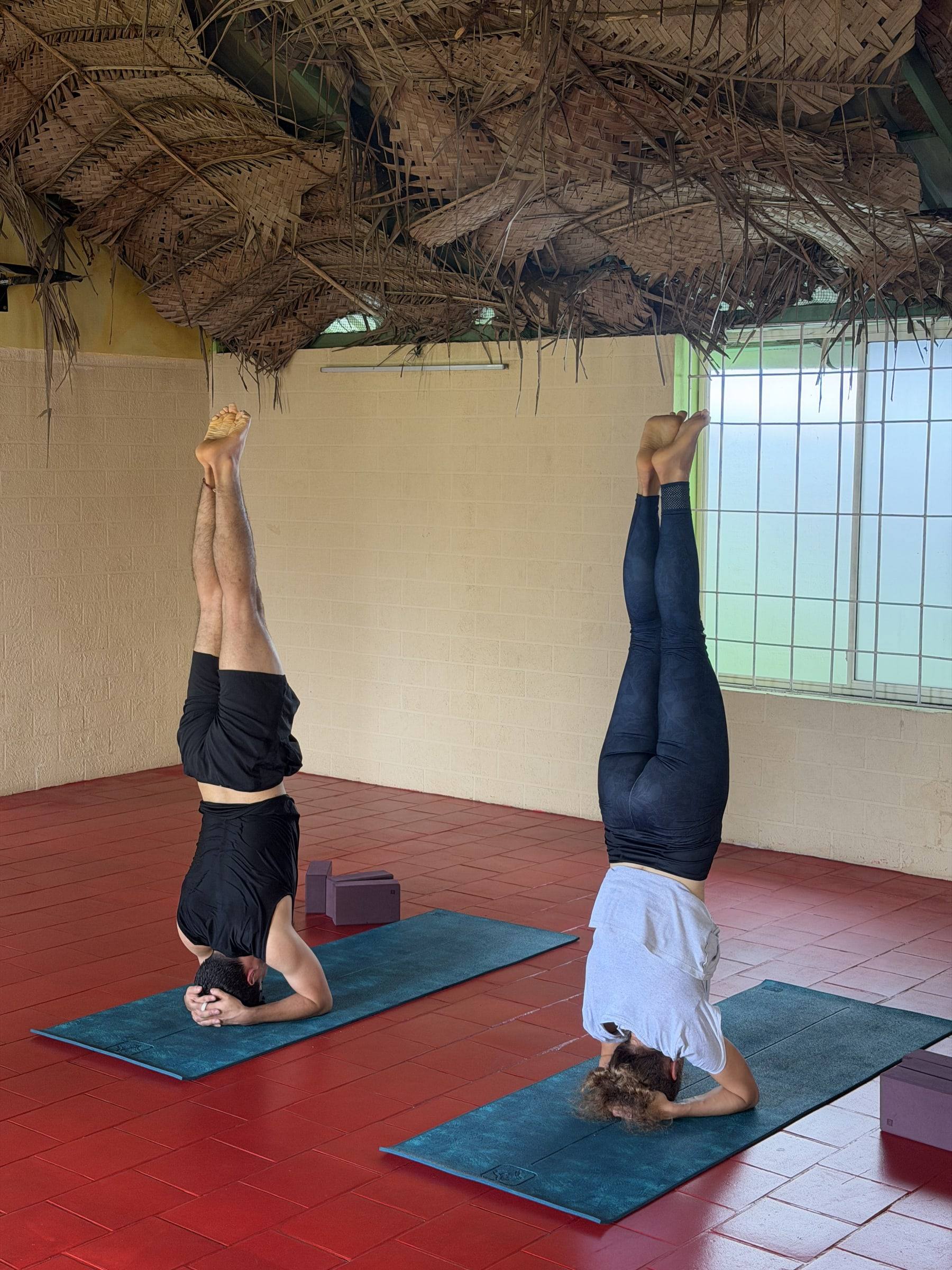
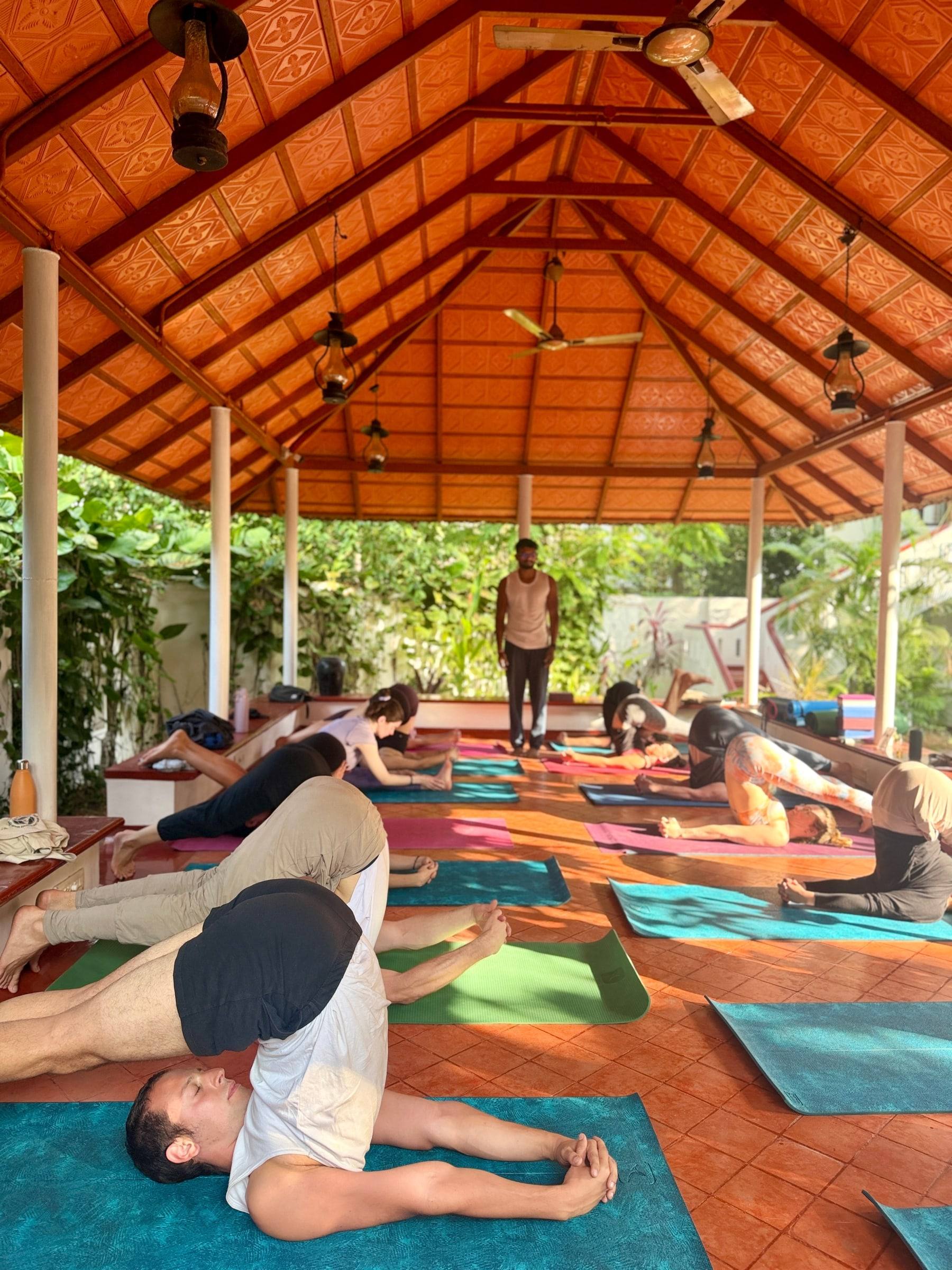
Posture, held long enough to learn something
Classical Hatha asanas taken slowly and held with steady breath, so the shape stops being a performance and becomes information about your own body. Strength arrives quietly; flexibility follows breath rather than force.
2 Prāṇāyāma
Breath as the instrument, not the warm-up
Kapalabhati, anuloma viloma, ujjayi and the bandhas that hold them together. Pranayama sits at the centre of every class here — it is the fastest route we know from a busy head to a quiet one.
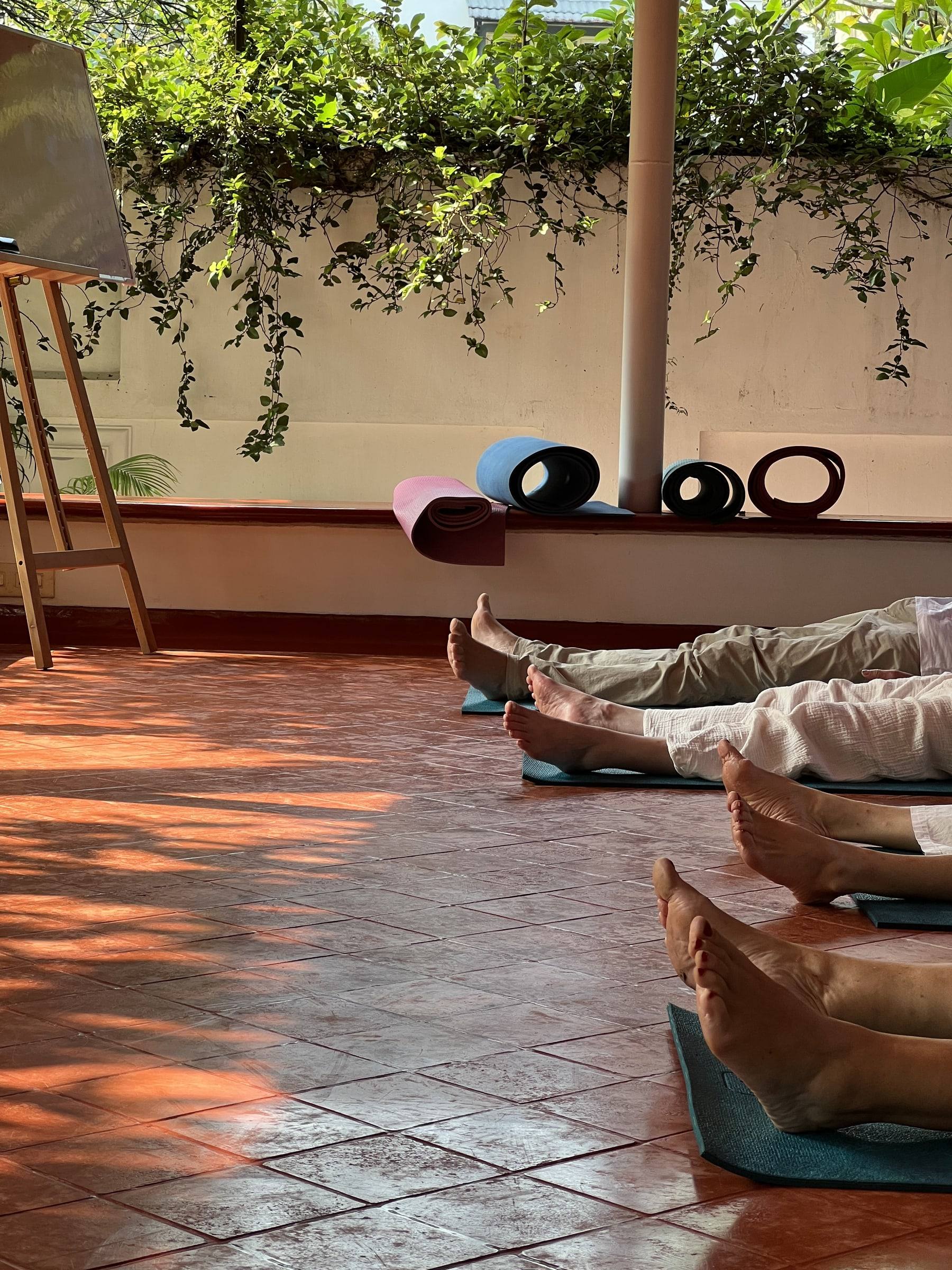
3 Śavāsana
Rest, taught as a skill
Deep relaxation closes every practice, guided through the body part by part. Most people discover they have never actually let go on purpose. This is the part visitors mention afterwards.
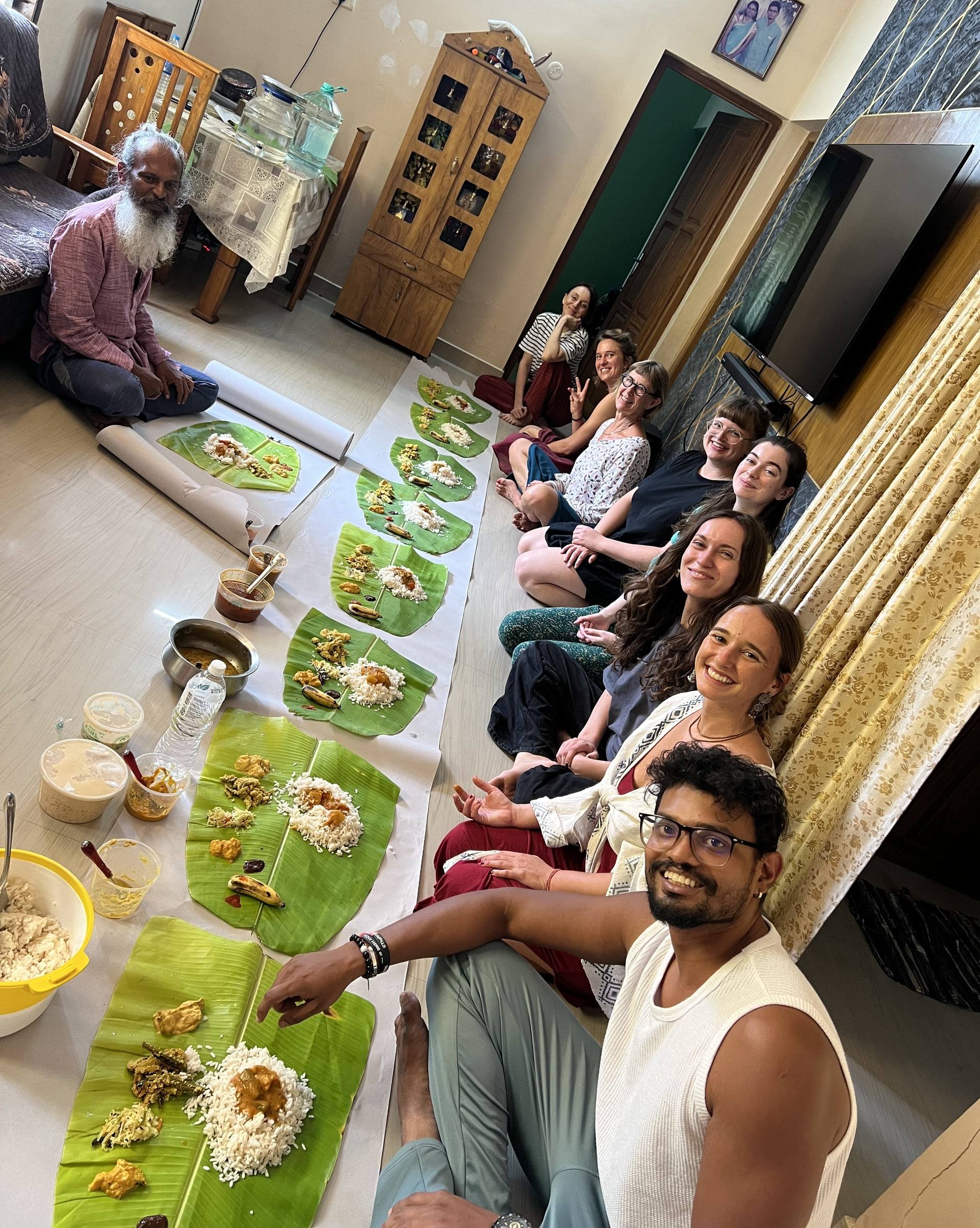
4 Mitāhāra
Sattvic food, Kerala kitchen
Rice, coconut, vegetables, dal, fruit and Ayurvedic tea. Simple, local, vegetarian — the diet that keeps a practice light rather than heavy. On courses and retreats it is cooked for you three times a day.
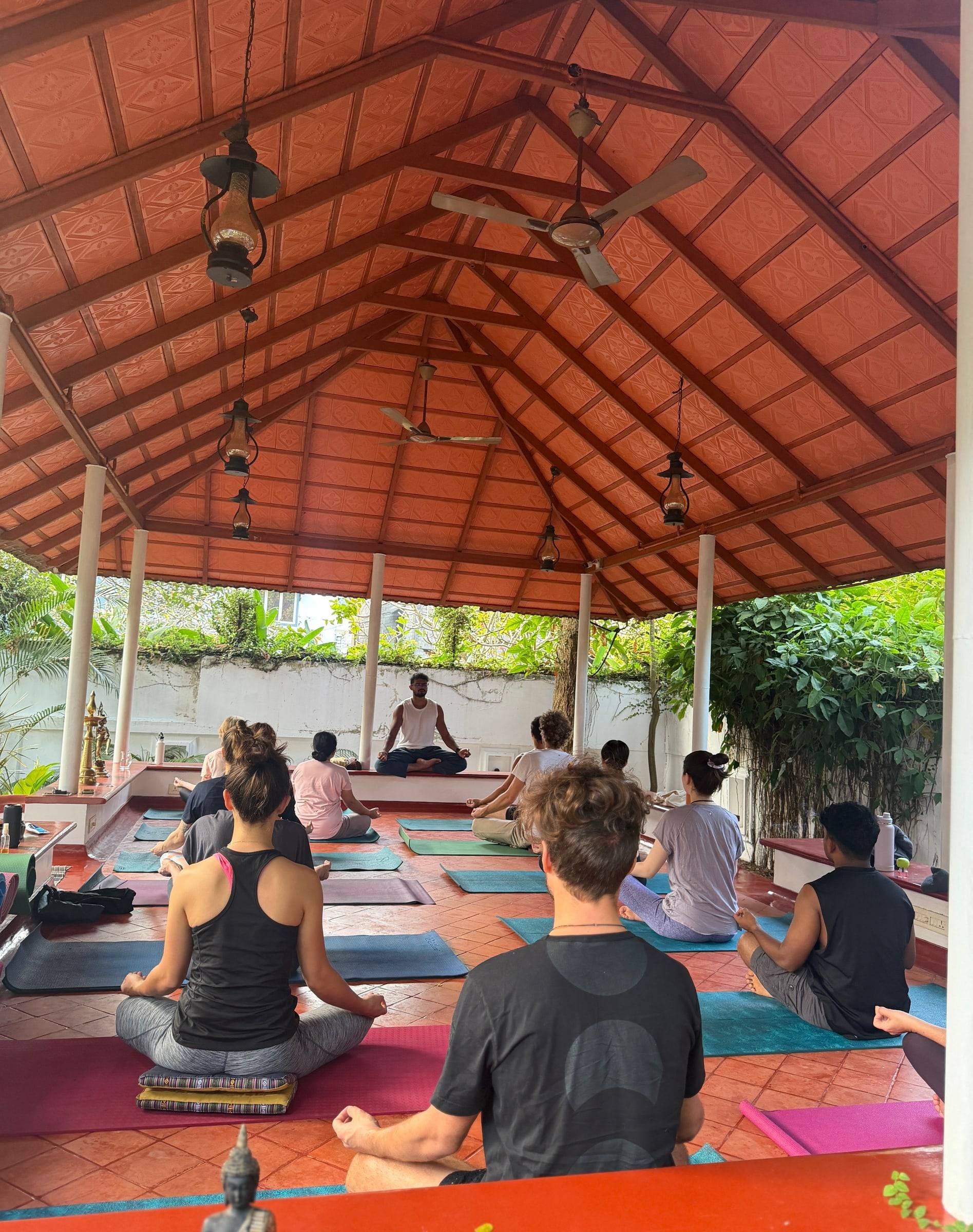
5 Dhyāna · Vedānta
Meditation, and the ideas behind it
A short sitting practice, chanting, and the philosophy that gives all of it a purpose — the eight limbs, the texts, the Vedantic question of who is doing the practising. Offered plainly, without mysticism.
The door is on Chirattapalam Road.
Two classes a day, every day. The simplest way to know the school is to practise in it once.