
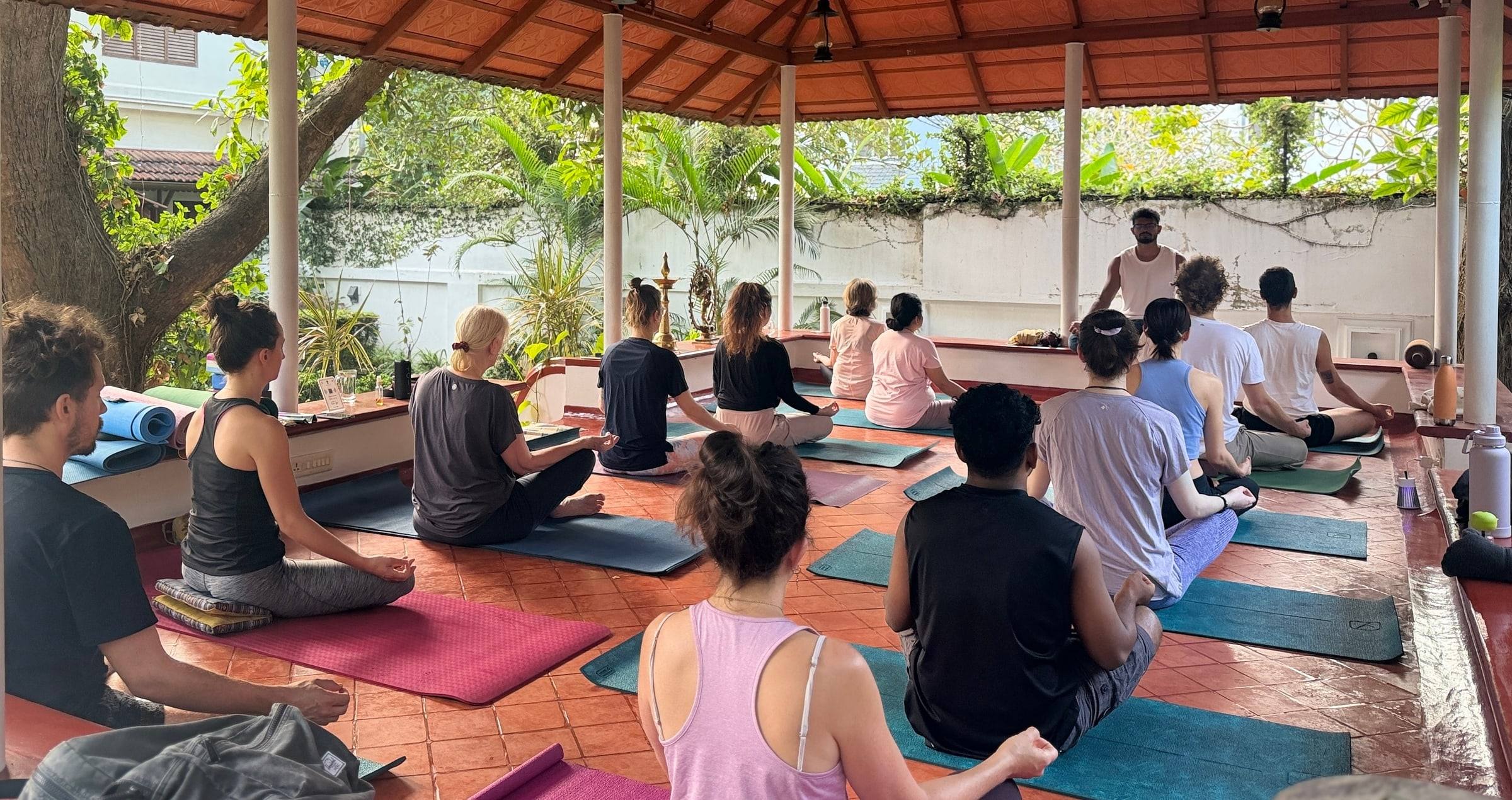
Inside a two-hour Hatha class, minute by minute
Two hours sounds long until you are in it. A walk through a traditional Hatha class in Fort Kochi — breath, sun salutations, the classical postures, deep rest — and why each part is where it is.
ReadThe blog
Practical writing on traditional Hatha yoga and on living — and practising — in Kerala. Written by the school, for students before and after they arrive.

Many yoga classes end with “Om shanti shanti shanti”. The school takes its name from that word. What santhi means, and why the Vedantic tradition repeats it three times.
Read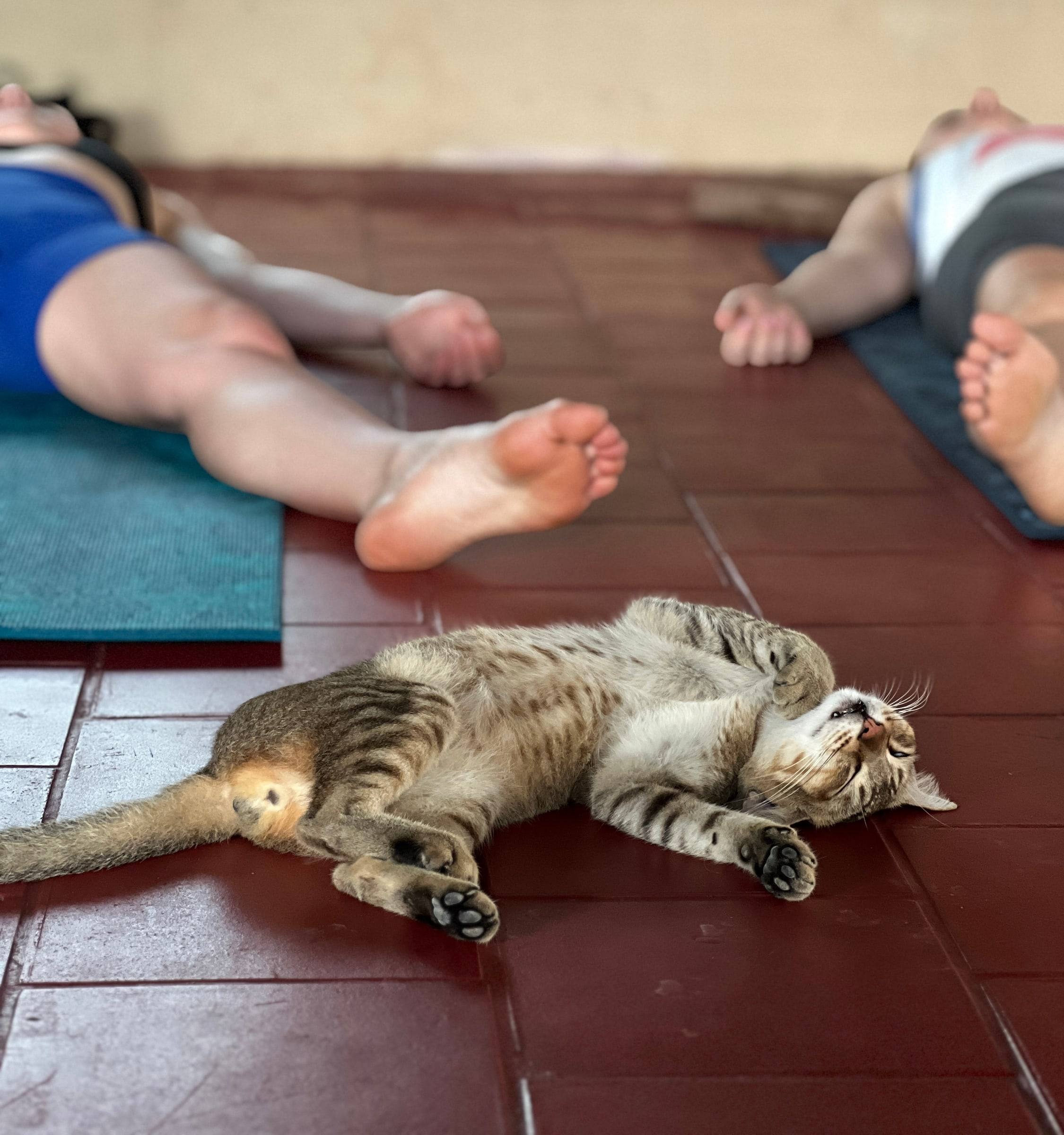
Corpse pose looks like the easiest posture in yoga and is often the hardest. Why the long relaxation in a Hatha class matters, and a simple guided method you can practise at home.
Read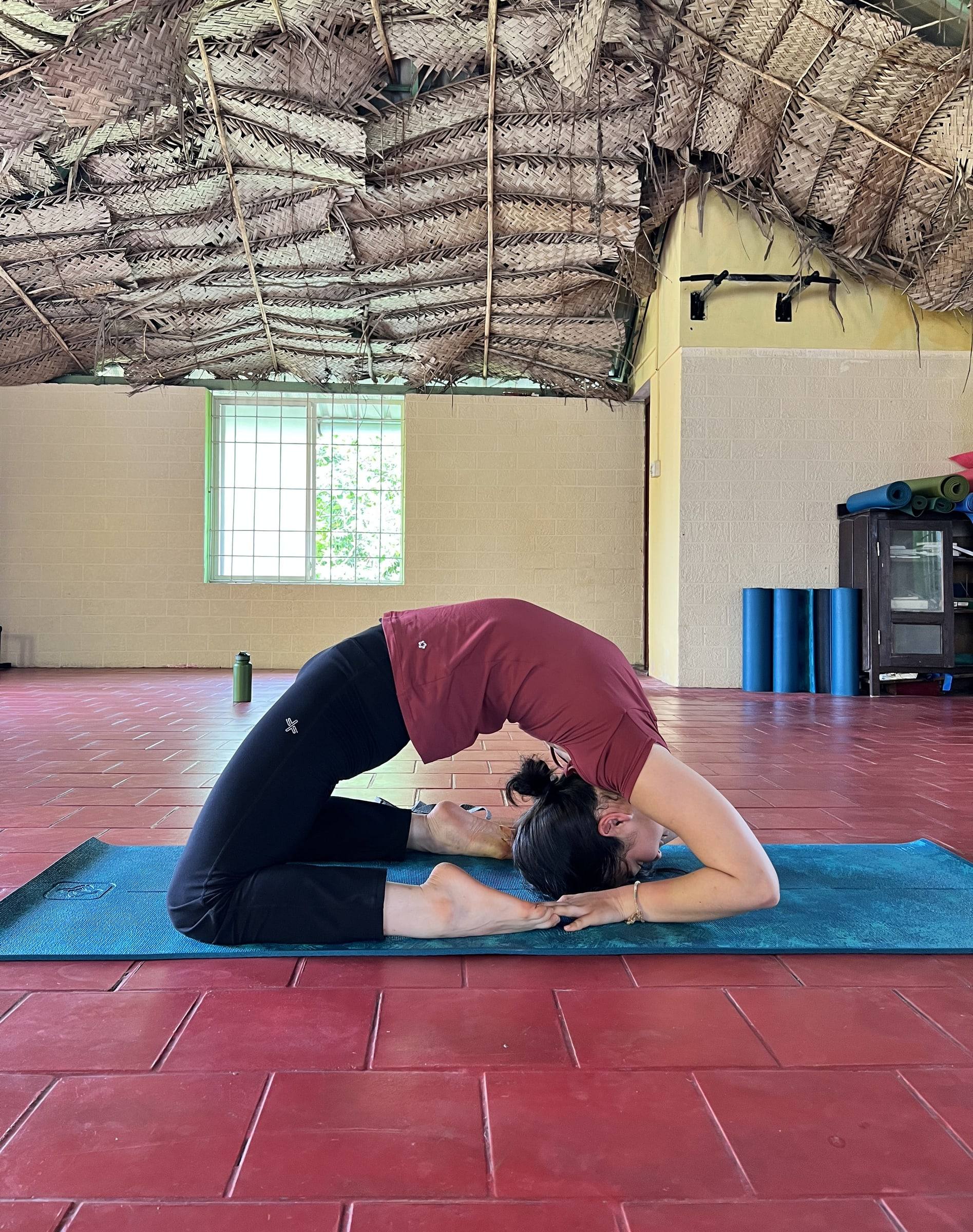
A practical six-week plan for the month before a residential yoga teacher training in India — daily practice, breath, reading, body care and the small logistics that make the first week easier.
Read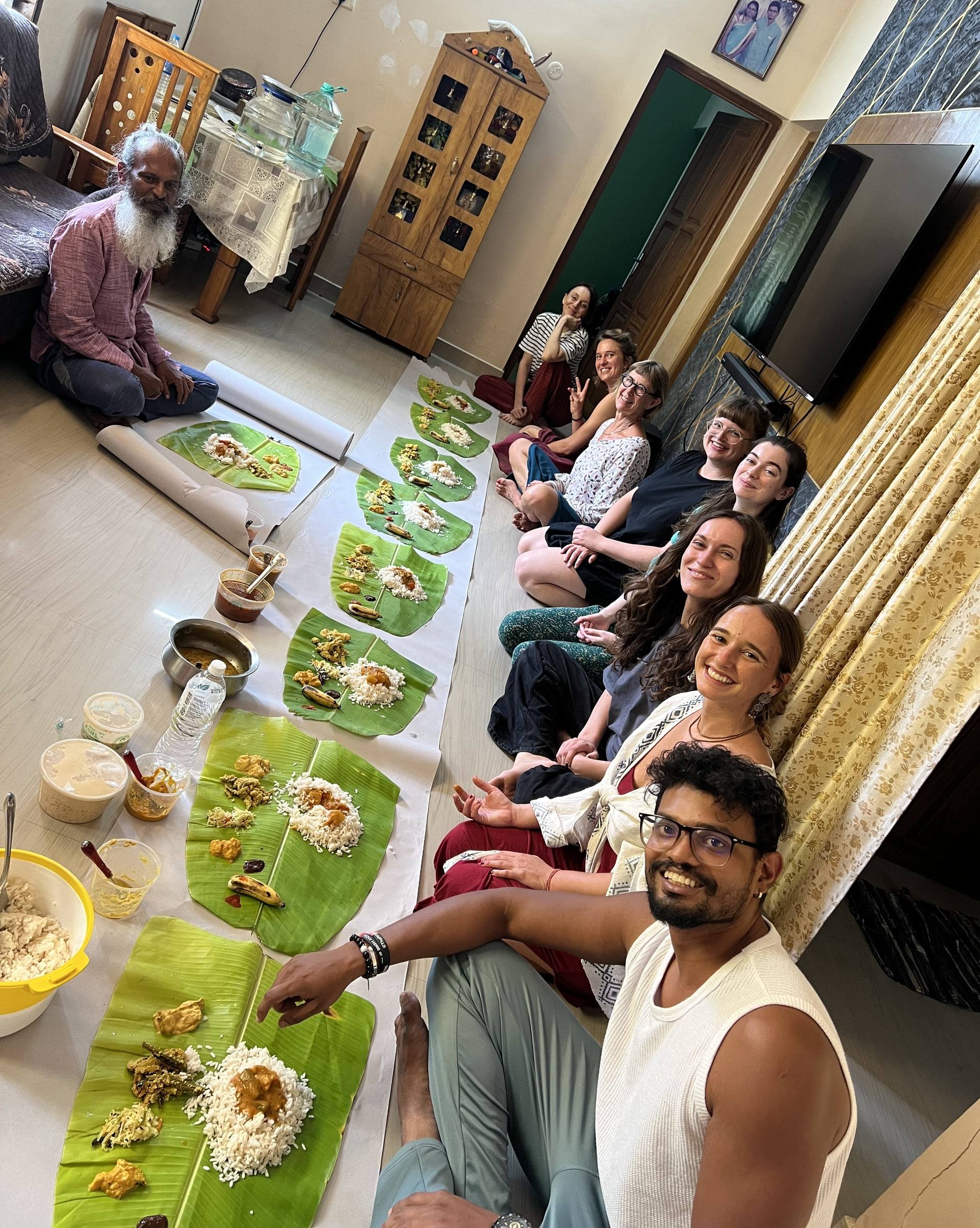
Sattvic eating is often described in vague, spiritual terms. Here is what it looks like on an actual plate in Kerala — rice, coconut, vegetables, dal, fruit — and why yoga traditions care about it.
Read
June to August in Kerala means rain on tiled roofs, cooler mornings and a green that is hard to describe. Why the monsoon is a quietly excellent season for yoga in Fort Kochi, and how to prepare.
Read
How to spend a morning in Fort Kochi at the pace of a yoga practice — early class in Chirattapalam, breakfast, the Chinese fishing nets, old lanes and a long lunch before the afternoon class.
Read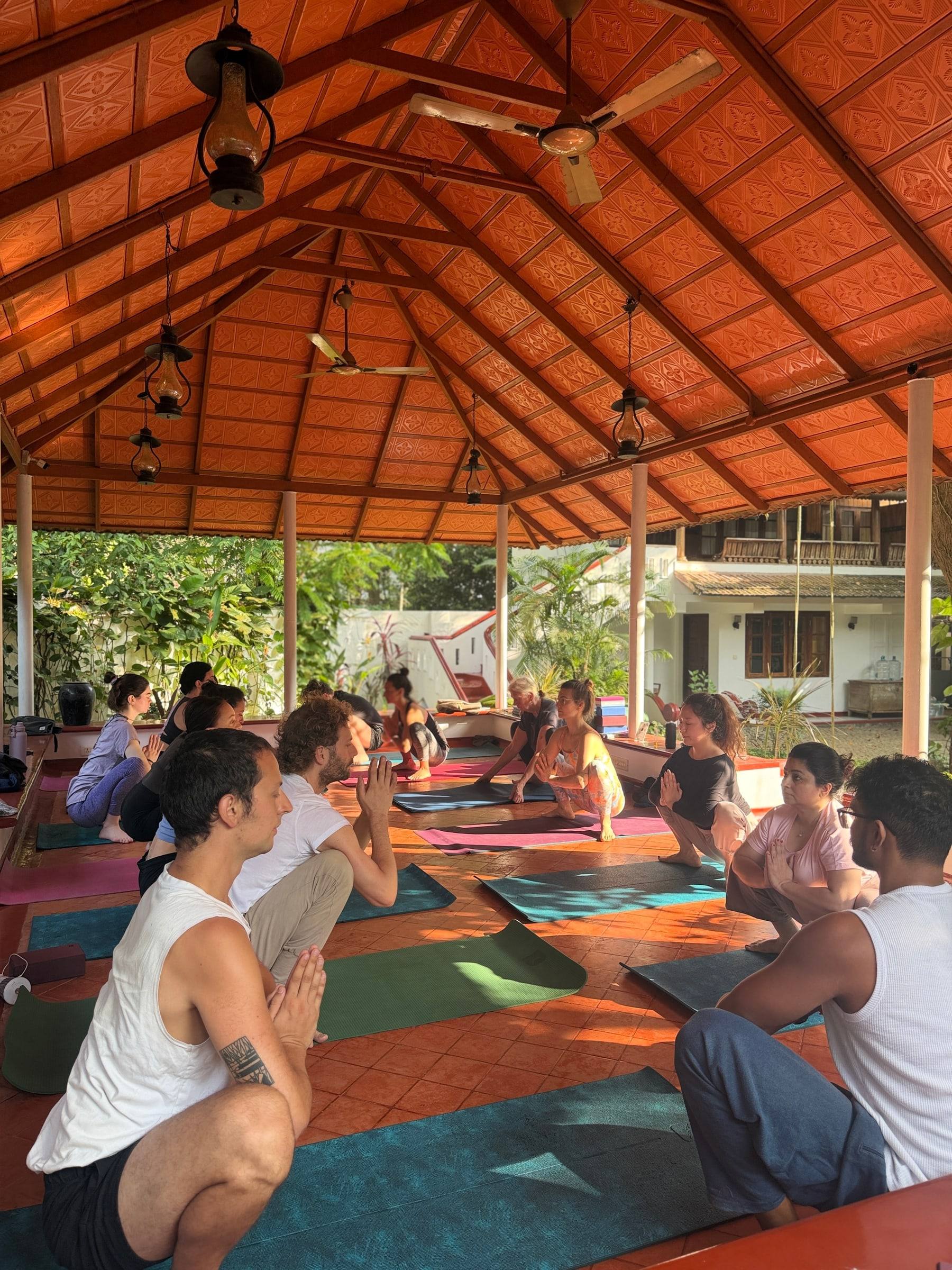
A yoga class of a dozen people and one of forty are different activities. How small groups change the teaching, the corrections, the safety and the experience — especially for beginners.
ReadNothing in this topic yet — more writing is on its way.
Everything written here is taught in the daily classes. Come and try it with a teacher in the room.