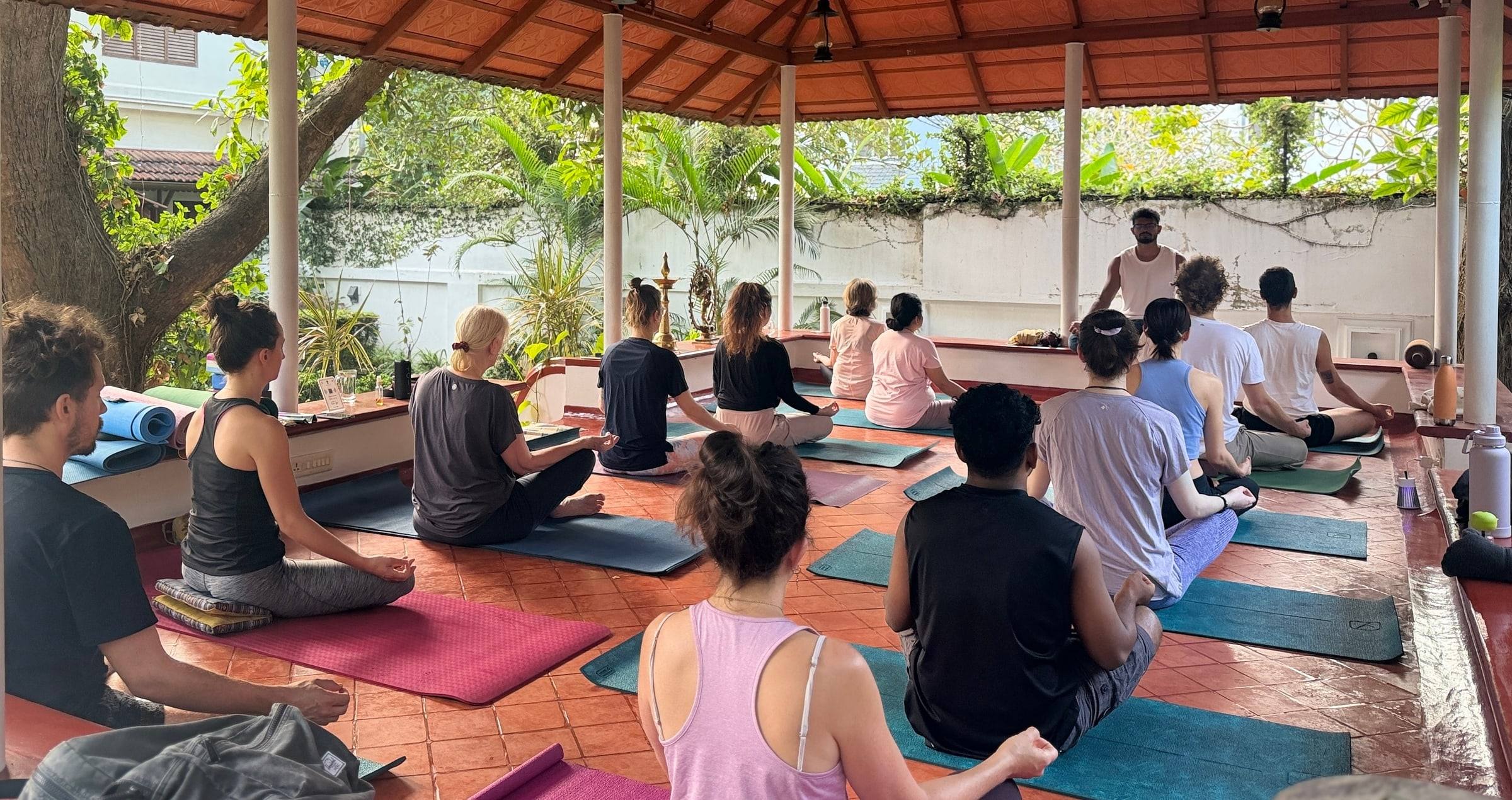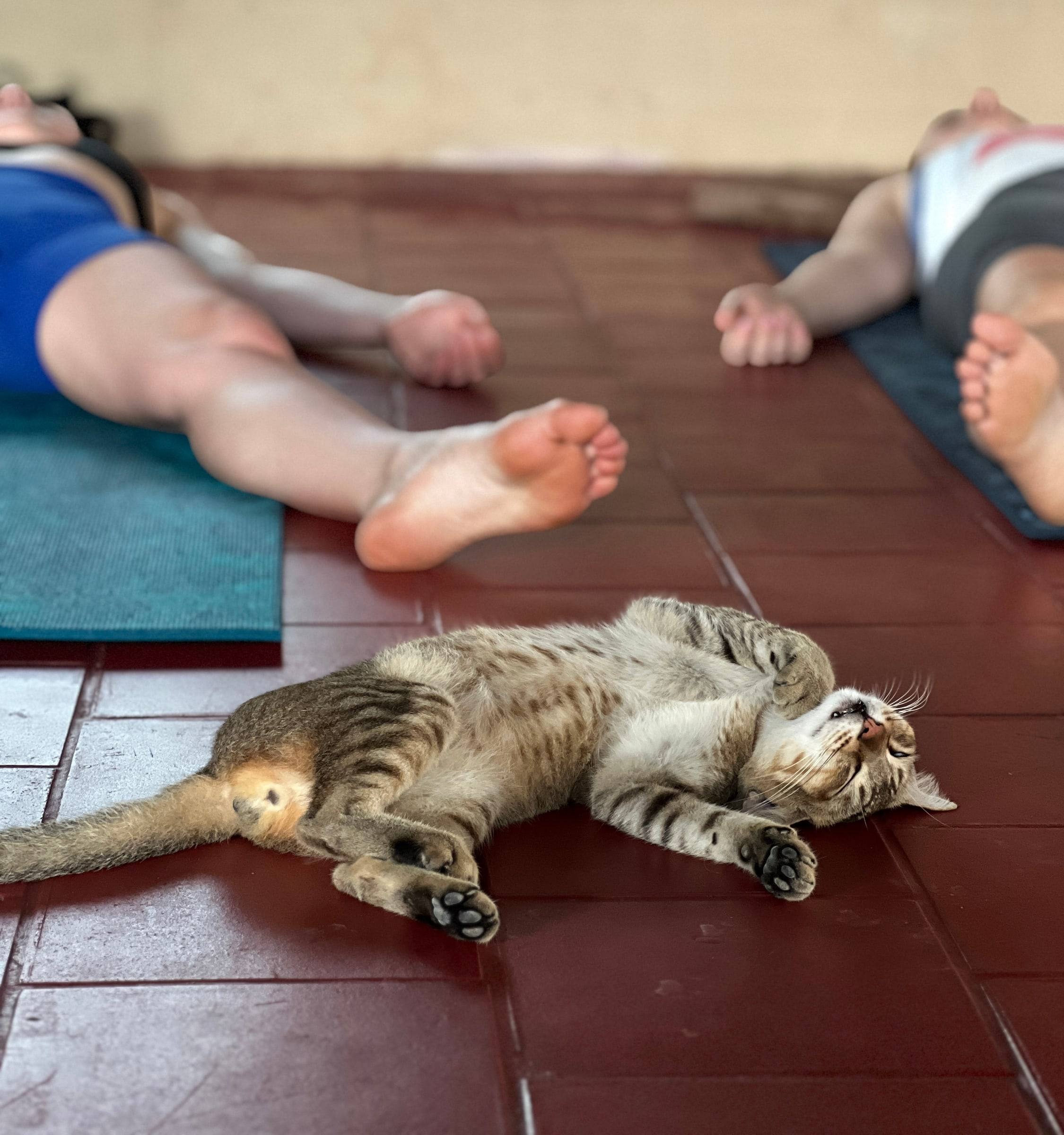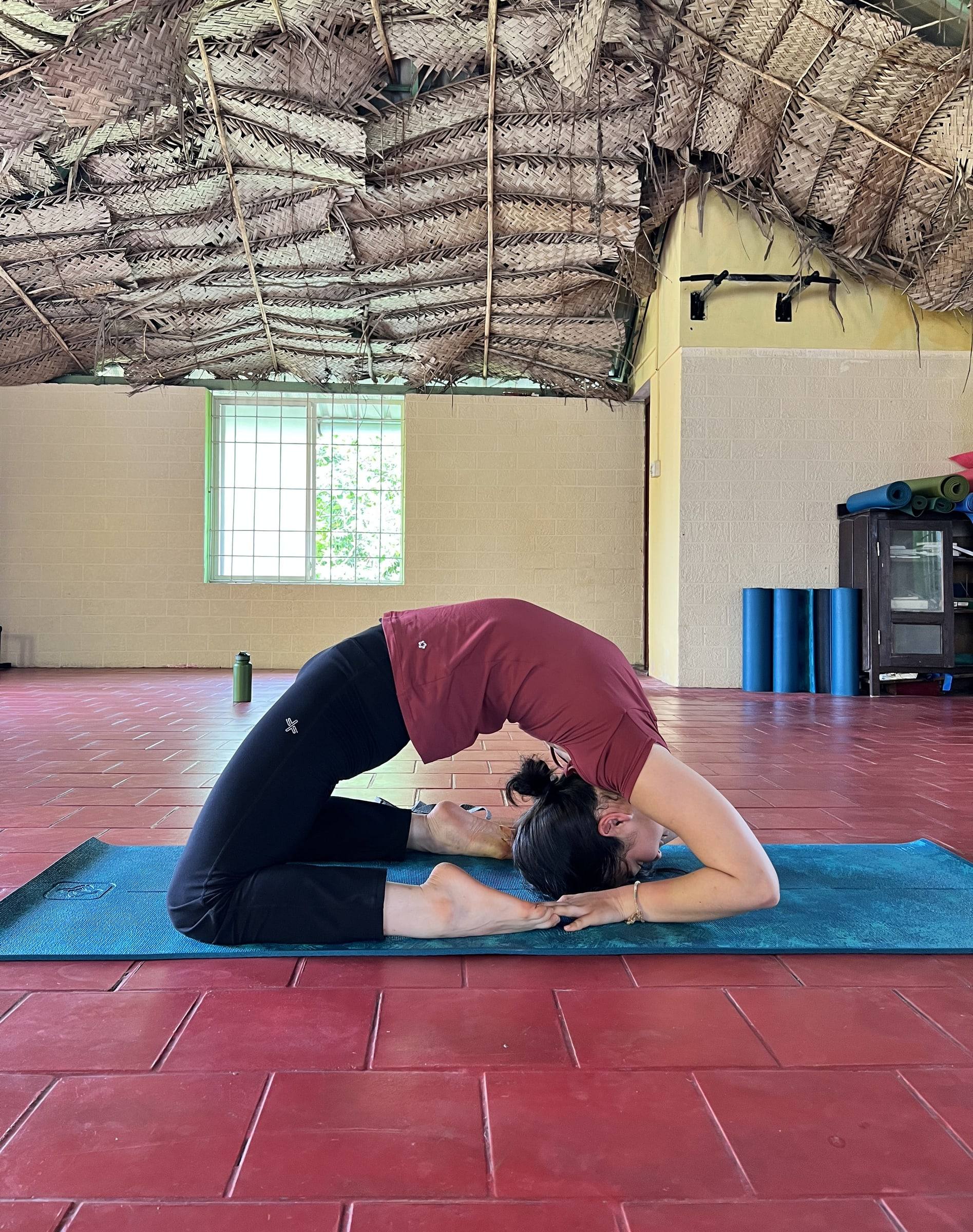
A residential teacher training is one of the most demanding and rewarding months many people ever spend. Twenty-eight days of early mornings, two practices a day, philosophy, anatomy and — the part nobody quite expects — standing up in front of a group and teaching.
You can arrive cold and still do well. But arriving prepared means spending the first week learning rather than recovering. Here is a six-week plan that works for most people.
Weeks six and five: build the daily habit
The single most useful preparation is a daily practice — not a long one, a daily one.
- Practise every day, even for twenty minutes. Consistency matters far more than duration. A short sequence of sun salutations, a few standing postures, a forward bend, a twist and a proper relaxation is plenty.
- Choose a fixed time. Training days usually start at dawn. If you can, move your practice earlier each week so your body is used to it.
- Take a class a week with a teacher if you can find a traditional Hatha or Sivananda-style class near you. Notice how the teacher sequences, speaks and corrects — you will be doing the same soon.
Week four: add the breath
Pranayama is a large part of a traditional training and the part many students have practised least.
- Add five minutes of alternate-nostril breathing (anuloma viloma) to your daily practice.
- Practise full yogic breath lying down: belly, ribs, chest on the inhale; the reverse on the exhale.
- If you already practise kapalabhati, keep it gentle. Advanced techniques and retentions are best learned in person.
Week three: start reading
The philosophy sessions are much richer if the ideas are not completely new.
- Read a clear, modern translation of the Yoga Sutras of Patanjali. Do not worry about understanding everything — note the questions it raises.
- Dip into the Bhagavad Gita. It turns up in yoga philosophy more than people expect.
- Learn the names of twenty common postures in Sanskrit. It is a small thing that makes the first days feel far less foreign.
Week two: look after the body
- Sort out niggles now. If a knee, shoulder or lower back has been complaining, see a physiotherapist before you travel, and tell your school about it before you arrive.
- Ease off caffeine and alcohol gradually. Most trainings serve sattvic vegetarian food and Ayurvedic tea; arriving already adjusted saves a week of headaches.
- Go to bed earlier. A 5:45 alarm is much kinder if you have been practising for it.
Final week: logistics and a quiet mind
- Check your visa and insurance. Make sure your travel insurance covers yoga and physical activity.
- Pack light, cotton and practical: several sets of practice clothes (they dry slowly in humidity), a shawl for early mornings and meditation, a notebook you like writing in, a water bottle, sandals.
- Plan to arrive a day early. Jet lag and a first-morning pranayama session are not good companions.
- Let go of the outcome. You will not master anything in a month. The training’s job is to give you a foundation and a way of continuing — not a finished practice.
What the first week will feel like
Honestly: tiring. Muscles you did not know you had will introduce themselves. The early mornings will feel early. Somewhere around day five the rhythm usually clicks — the body adapts, the group settles, and the days start to flow into each other.
The preparation above will not make that first week easy. It will make it yours, rather than something that happens to you.
Choosing where to train
If you are still deciding on a school, ask every one of them the same questions: how many students are in a batch, who actually teaches, what the certificate is and who recognises it, and what a day looks like. Our 200-hour training in Fort Kochi is small, traditional and — we say this plainly on the page — not Yoga Alliance registered, so it suits people who value the teaching over the credential.
If you want a head start in person, a few private sessions before your course is the fastest way to arrive with confident foundations.
Quick answers
How fit do I need to be for a 200-hour yoga teacher training?
You do not need to be an athlete or able to do advanced postures. What helps most is a steady daily practice for a few weeks beforehand, so that two practices a day for a month feels demanding but not shocking.
What should I read before a yoga teacher training?
A readable translation of the Yoga Sutras of Patanjali and the Bhagavad Gita, plus a clear introduction to Hatha yoga, will give you a head start on the philosophy sessions. Ask your school for their reading list.
Try this with a teacher in the room.