“Eat sattvic food” is one of those pieces of yoga advice that sounds profound and tells you almost nothing. What is it, actually? What goes on the plate?
In Kerala the question answers itself fairly quickly, because a great deal of everyday home cooking here already sits close to the sattvic ideal. Here is what it means, and what it looks like three times a day.
The idea in one paragraph
Yoga and Ayurvedic traditions describe three qualities — gunas — found in everything, including food. Sattva is clarity and balance; rajas is agitation and drive; tamas is heaviness and inertia. Sattvic food is food that leaves you lighter and clearer after eating than before: fresh, simply prepared, not too spicy, not too heavy, eaten in reasonable quantities at calm times. Rajasic food (very spicy, very stimulating, eaten in a hurry) and tamasic food (stale, overprocessed, heavy, fried, alcohol) are the other two ends.
The reasoning is practical as much as spiritual. It is hard to sit still in meditation after a heavy meal, and hard to practise pranayama on a stomach full of fried food.
What it looks like in Kerala
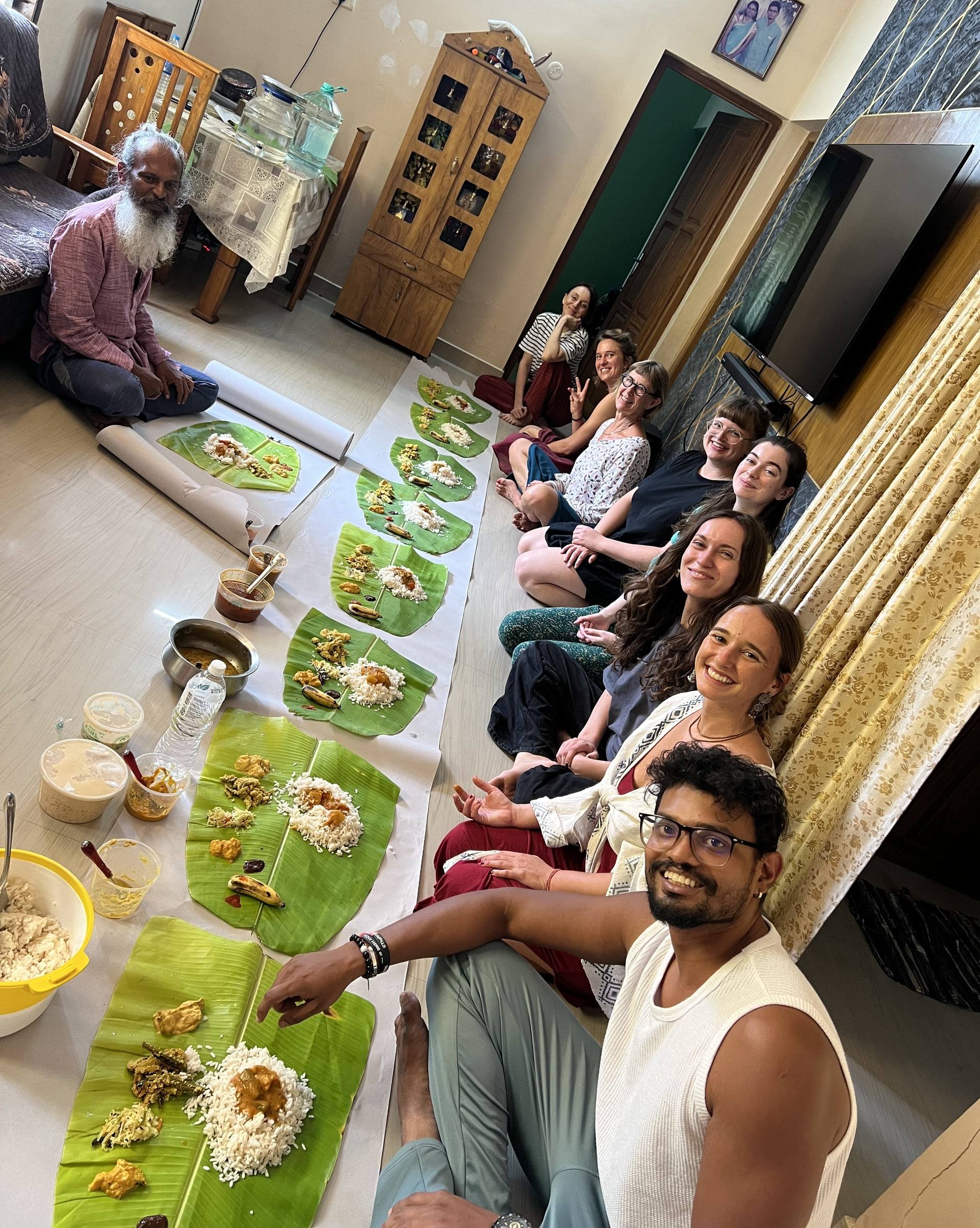
Rice is the centre of most meals — often the red, nutty Kerala matta rice.
Coconut appears everywhere: grated into thoran (dry vegetable stir-fries), ground into curries, pressed into milk for stews. It gives richness without heaviness.
Vegetables are local and seasonal: plantain, pumpkin, ash gourd, drumstick, long beans, cabbage, okra, leafy greens.
Pulses arrive as dal, as the lentil-and-vegetable sambar, or in the gentle coconut-and-lentil dishes of home kitchens.
Spices are used, generously, but with balance: curry leaves, mustard seed, cumin, turmeric, ginger, black pepper, cardamom.
Fruit — bananas of a dozen kinds, papaya, pineapple, mango in season — sits at breakfast and in between meals.
Buttermilk — thin, salted, sometimes with ginger and curry leaf — is Kerala’s great digestive, and very sattvic.
The traditional sadya, the feast served on a banana leaf at festivals, is essentially a sattvic banquet: rice with a long procession of small vegetable dishes, sambar, rasam, pickles and a sweet payasam at the end.
How we eat on courses and retreats
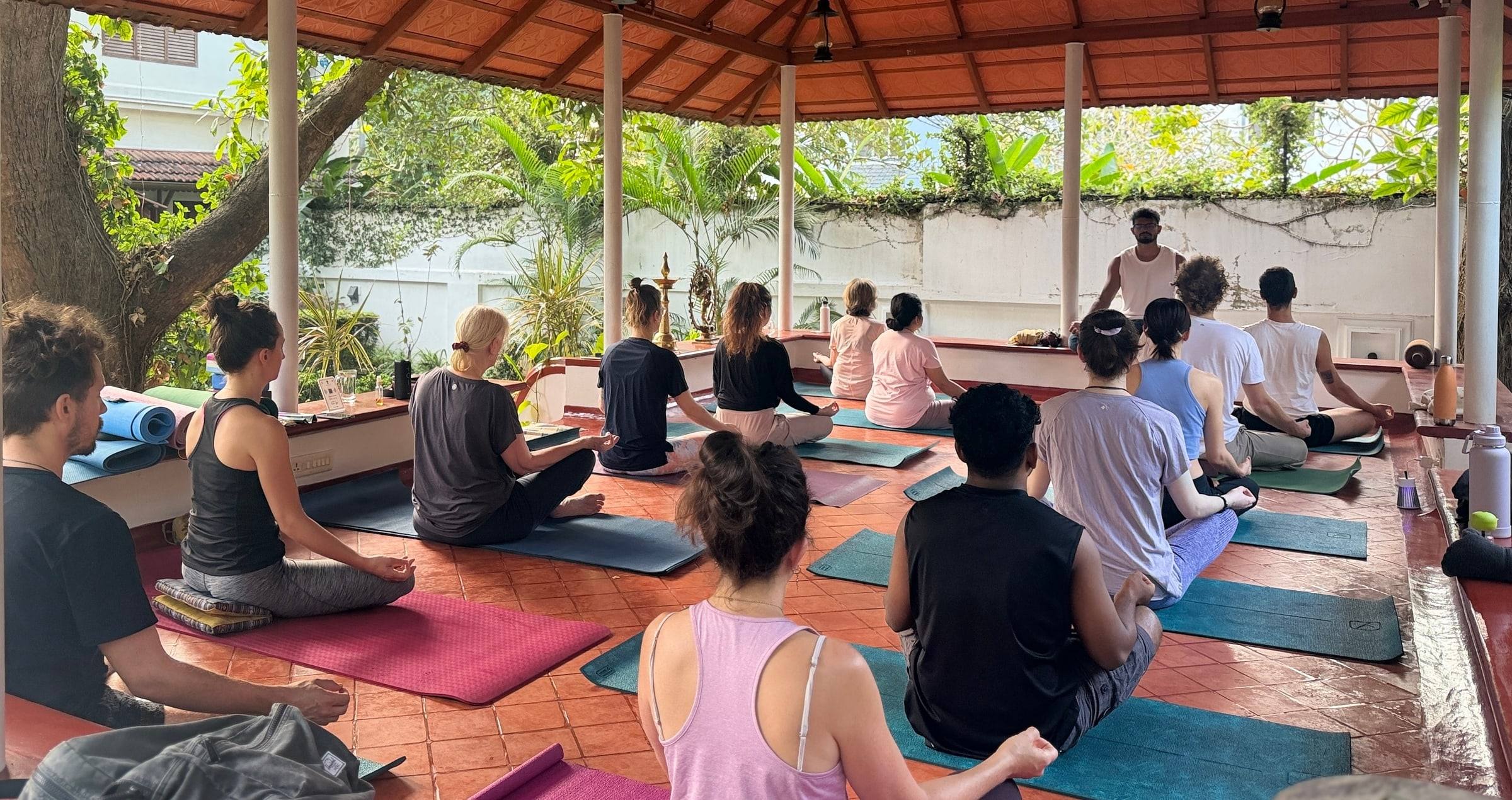
On our teacher trainings and retreats all meals are vegetarian and sattvic in spirit, with Ayurvedic tea through the day. The rhythm matters as much as the food:
- Nothing heavy before practice. Morning practice happens on an empty stomach; breakfast follows.
- The main meal at midday, when digestion is strongest — followed by genuine rest.
- A lighter, earlier dinner, so sleep is deep and the dawn practice comes easily.
Most trainees notice the effect within a week: steadier energy, fewer slumps, easier mornings.
Bringing it home
You do not need to move to Kerala to eat this way. A few principles travel well:
- Eat fresh, simply cooked food, mostly plants.
- Make the midday meal your largest.
- Leave two or three hours between eating and practice.
- Eat slowly, sitting down, without a screen.
- Notice how you feel an hour after a meal. That feeling is the whole test.
Sattvic eating is best treated as a direction of travel, not a rulebook. The point is not purity — it is a body and mind that are easy to practise in.
Quick answers
What is a sattvic diet?
A sattvic diet is a light, fresh, mostly vegetarian way of eating described in yoga and Ayurvedic tradition — grains, vegetables, fruit, pulses, nuts, dairy in moderation and gentle spices — chosen because it leaves the body and mind calm and clear rather than heavy or agitated.
Are onions and garlic sattvic?
In the strictest traditional definitions, no — they are considered stimulating. Many practitioners, and many Kerala kitchens, use them anyway. Sattvic eating is best understood as a direction rather than a rulebook.
Try this with a teacher in the room.