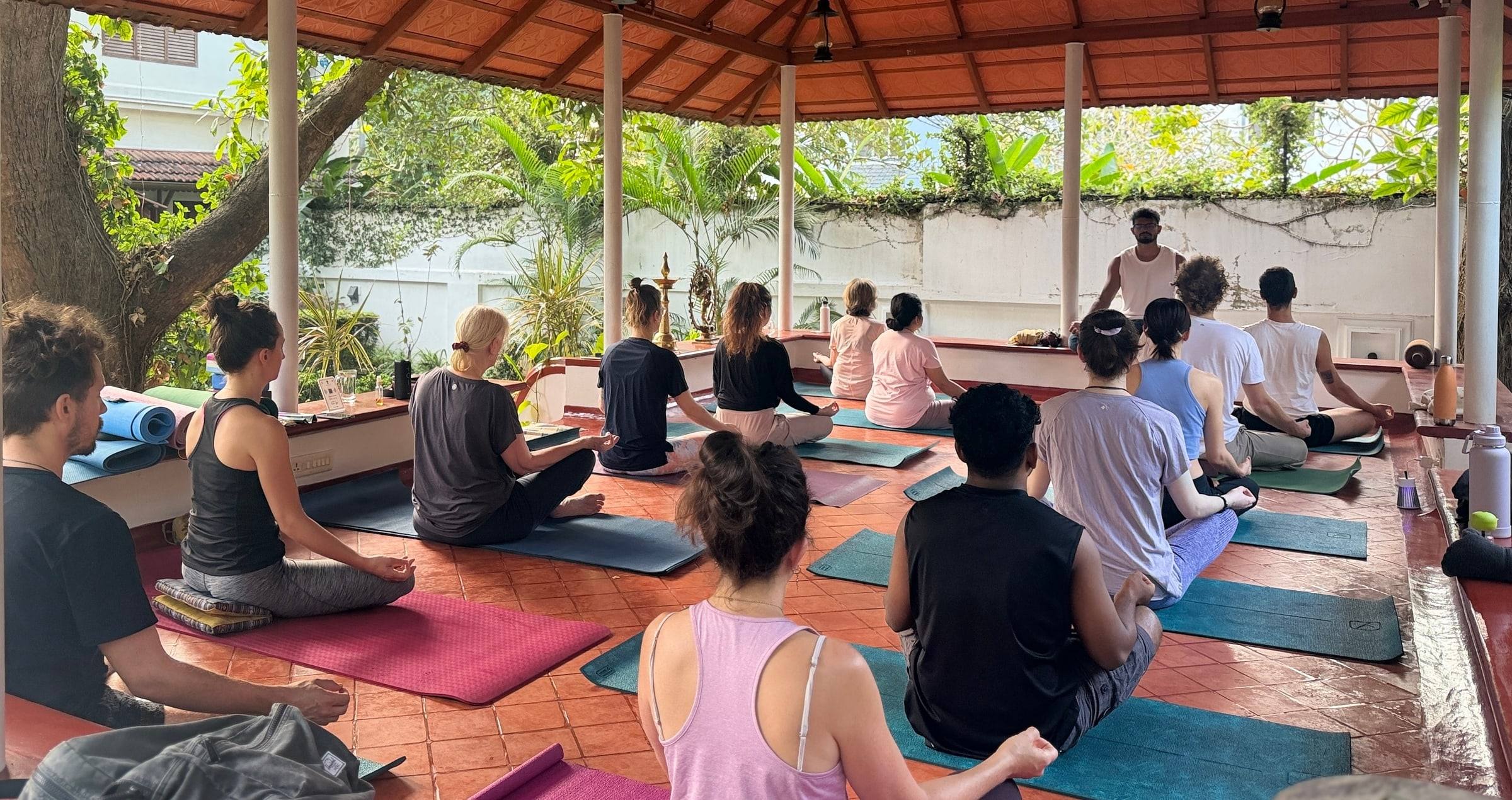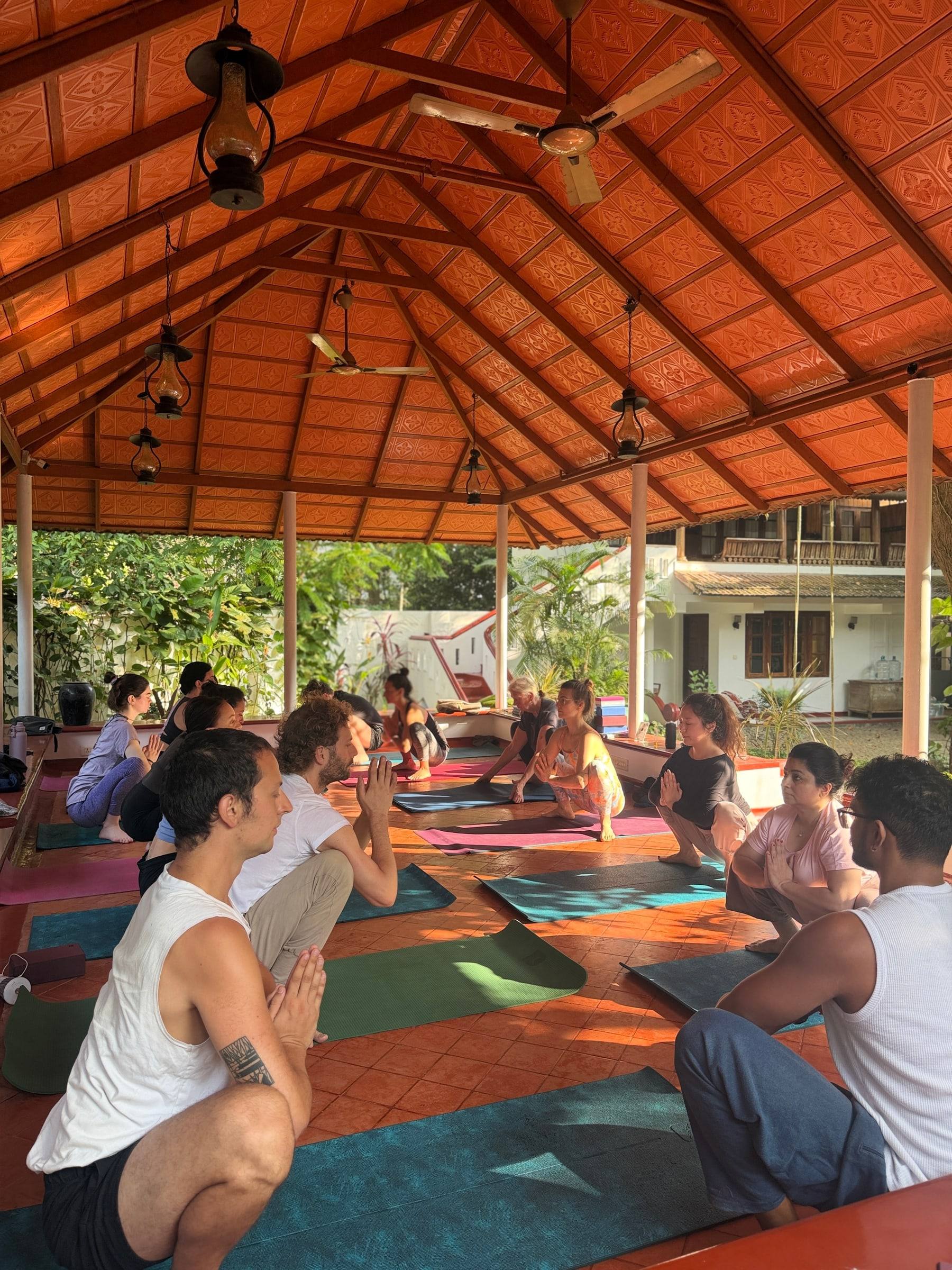
There is a simple reason the classes at Santhi have always stayed small: the teacher needs to be able to see everyone.
That sounds obvious. It is also the thing that quietly disappears when a class gets bigger. Here is what changes when a group stays small — and why it matters more than the music, the lighting or the mat.
The teacher actually sees you
In a large class, instruction has to be general. “Lengthen your spine.” “Engage your core.” The teacher demonstrates at the front and hopes. In a small class the teacher walks the room, watches each person breathe into a posture, and speaks to your spine, your knee, your habit of holding your breath.
This is not a luxury. It is how Hatha yoga has always been passed on — from teacher to student, one correction at a time.
Corrections arrive early, not late
Most yoga injuries do not come from one dramatic moment. They come from repeating a small misalignment hundreds of times: a knee drifting inwards in a lunge, a lower back taking the load of a backbend, a neck compressed in a shoulderstand.
A teacher with a dozen students can catch those patterns on day one. With forty, they may never see them.
Beginners stop hiding
In large classes, beginners often go to the back row and try to copy the person in front. In a small room there is no back row. That can feel exposing for about ten minutes, and then it becomes the opposite: you realise you will be given a version of each posture that suits you, and that nobody is watching except the one person whose job is to help.
Advanced students go deeper
Small groups are not only for beginners. Experienced practitioners get something rarer: specific, honest feedback on a practice that may have run on autopilot for years. The long holds and slow pace of a traditional class give room to work on the details that large classes rush past.
The room becomes quiet
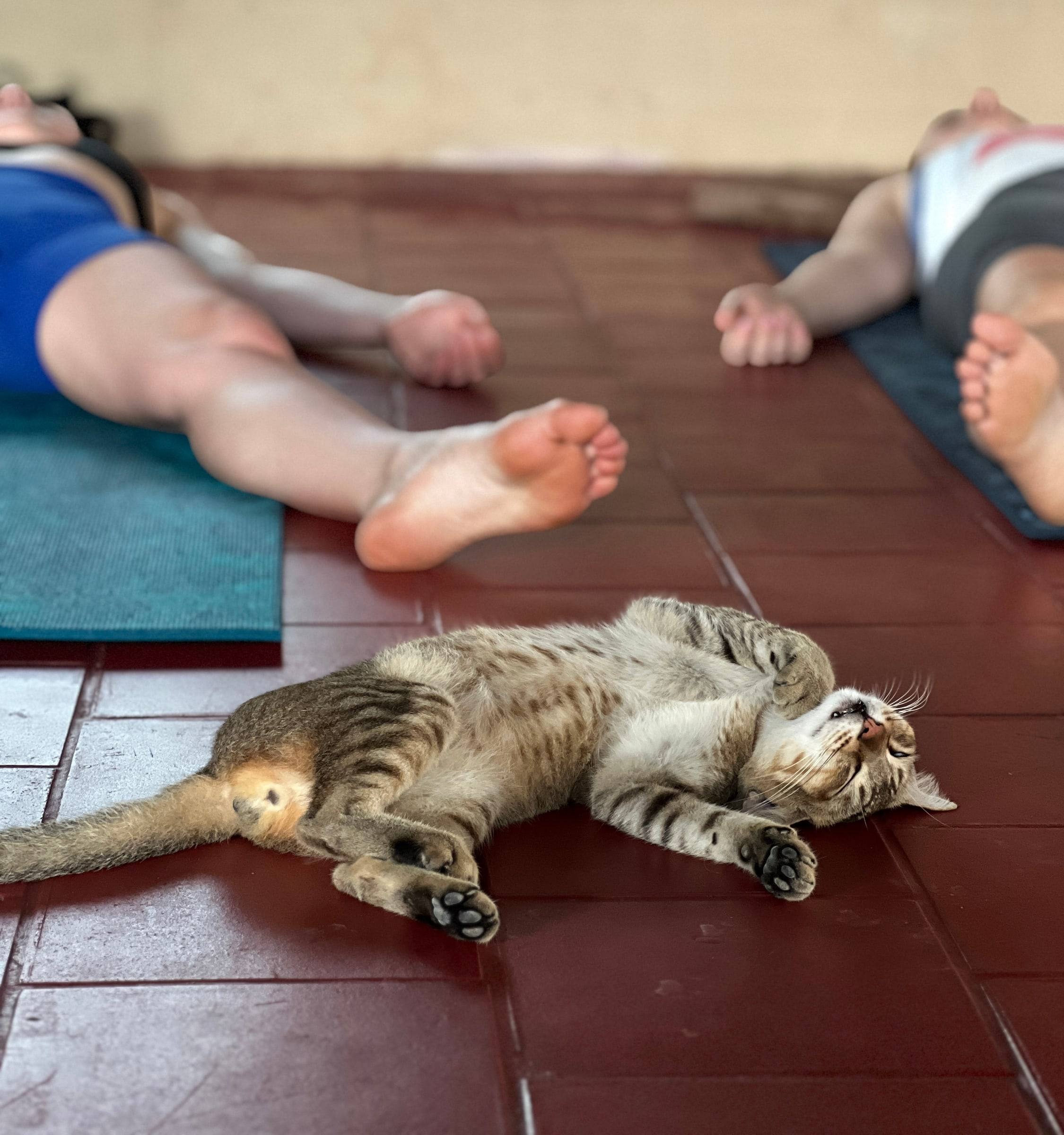
A small group settles faster. There is less shuffling, less waiting, less noise. Pranayama is easier to hear yourself in. The final relaxation goes deeper. It is hard to overstate how much the texture of a class changes when there are fewer bodies in it.
What it costs the school
Honestly: income. A studio that fills every mat makes more money. We have chosen to stay small anyway — for the daily classes, the private sessions, and especially the teacher training, where a small batch means every trainee is corrected, and teaches, every single day.
If you have only practised in large classes, try one small one. Come to a daily class in Fort Kochi and tell the teacher what you would like help with. You will know within the first half hour whether it makes a difference.
Quick answers
Are small yoga classes better for beginners?
Generally, yes. In a small group the teacher can see every student, offer an easier version of a posture before strain sets in, and correct alignment early — which is exactly what beginners need most.
Try this with a teacher in the room.